
Net Carb Estimator for Keto Recipes
Consult a doctor before starting any diet. Not medical advice. See Disclaimer and Terms of Service for details.
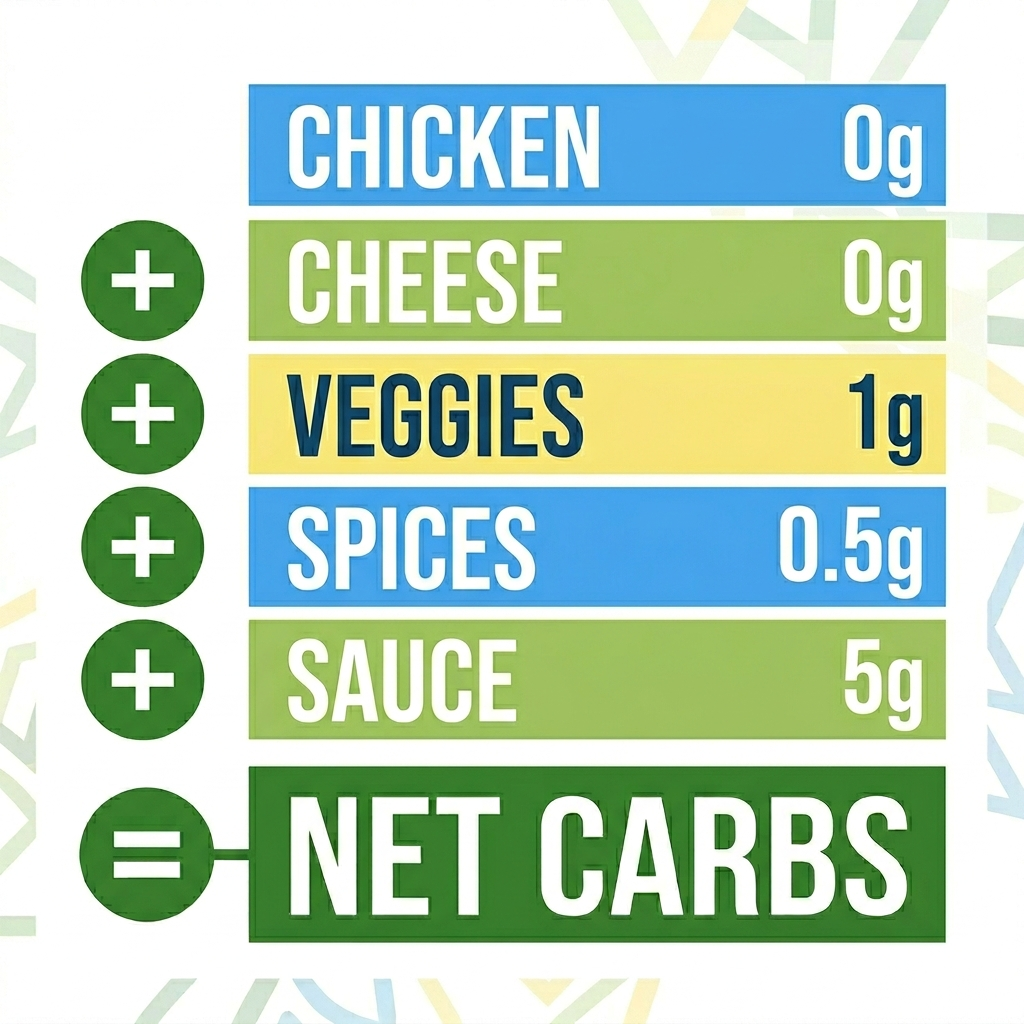
Whether you are following an existing keto recipe, creating your own low-carb meals, or simply combining foods you already have on hand, estimating net carbs helps you stay within your keto goals more accurately. This practical tool walks you through calculating the total net carbs for an entire recipe, then dividing by the number of servings to determine the net carbs per serving.
This process is especially useful for homemade casseroles, soups, sauces, baked goods, skillet meals, smoothies, desserts, and “lazy keto” meal assemblies where packaged nutrition labels do not already provide final net carb counts.
Basic Formula for Net Carbs
Net Carbs = Total Carbohydrates − Dietary Fiber − Sugar Alcohols − Allulose/Tagatose/Glycerin
All the ingredients subtracted from Total Carbohydrates here are usually subtracted when calculating net carbs because they have a smaller impact on blood sugar compared to standard digestible carbohydrates.
How This Tool Works
You will:
Calculate net carbs for each ingredient used in the entire recipe
Add together the net carbs from all ingredients to give the total for the recipe
Divide the total by the number of servings
This gives you the estimated net carbs per serving. Follow the detailed instructions in the sections below, and use the worksheet at the bottom to do your calculations.
Step 1: Calculate Total Net Carbs for Each Ingredient
Look at the nutrition label (or reliable nutrition database) for every ingredient that contains carbohydrates. (If you don't know which contain carbohydrates, look them up.)
For each ingredient:
Write down the amount you are actually using in the recipe
Check the serving size listed on the nutrition label
Multiply the nutrition values if needed to match the amount you are using
Find the total carbohydrates
Subtract dietary fiber
Subtract sugar alcohols
Subtract allulose, tagatose, and glycerin/glycerol if listed (these are often shown elsewhere on the package in a net carb calculation rather than directly in the Nutrition Facts panel)
Do this for every ingredient that contains carbs, including sauces, seasonings, vegetables, sweeteners, nuts, dairy products, toppings, and others.
How to Calculate Net Carbs for the Exact Amount You Are Using
Nutrition labels usually show values for a smaller serving size, not for the total amount used in your recipe. You may need to multiply the nutrition values to match the amount you are actually using.
Example:
If a sauce label says:
Serving Size: 1/2 cup
Net Carbs: 5g per serving
And your recipe uses 2 cups total:
2 cups ÷ 1/2 cup servings = 4 servings
4 × 5g net carbs = 20g Total Net Carbs for Whole Recipe
Always calculate the net carbs for the full amount used in the recipe before moving to Step 2.
Example Recipe: Cheesy Chicken Bake
2 Chicken Breasts
Total carbs: 0g
No subtraction needed
= 0g net carbs
1 Cup Shredded Cheese
Total carbs: 0g
No subtraction needed
= 0g net carbs
2 Cups Zucchini
7g total carbs − 2g fiber
= 5g net carbs
Italian Seasonings
3g total carbs − 1g fiber
= 2g net carbs
2 Cups Keto Pasta Sauce
24g total carbs − 4g fiber
= 20g net carbs
Step 2: Calculate Total Net Carbs for the Entire Recipe
Now add together the net carbs from every ingredient.
0g Net Carbs for Chicken
0g Net Carbs for Cheese
5g Net Carbs for Zucchini
2g Net Carbs for Seasonings
20g Net Carbs for Sauce
27g Total Net Carbs for Whole Recipe
Step 3: Divide by Number of Servings
Divide the Total Net Carbs for Whole Recipe by the number of servings.
Example:
27g total net carbs ÷ 4 servings
= 6.75g Net Carbs per Serving
Tips for More Accurate Keto Recipe Calculations
Measure ingredients as accurately as possible
Check serving sizes carefully on nutrition labels
Count all carb-containing ingredients, even small additions
Sauces, dressings, seasonings, nuts, and sweeteners can add up quickly
Fiber-rich foods like vegetables, nuts, and seeds still contribute important nutrients and satiety
If a recipe contains optional toppings, calculate them separately if desired
For very large batch recipes, consider rounding slightly upward for safety
Worksheet to Calculate Net Carbs in a Recipe
You can print this page, copy and paste it into a document, or write it out on paper to calculate your own keto recipes.
IMPORTANT: You only need to include on this worksheet any ingredients that contain net carbs. Ingredients with 0g net carbs can be left out of these calculations completely (for example, the chicken and cheese in our example recipe would not need to be included below).
Step 1: Calculate Total Net Carbs for Each Ingredient
Ingredient 1 (name):
A. Gather from Package Label:
Serving Size Listed on Nutrition Label
Total Carbs
Dietary Fiber
Sugar Alcohols
Allulose/Tagatose/Glycerin
B. Calculate Net Carbs per Serving Size on Nutrition Label:
Total Carbs − Dietary Fiber − Sugar Alcohols − Allulose/Tagatose/Glycerin
= Net Carbs per Serving Size on Nutrition Label
× Amount of This Ingredient Used in Recipe
÷ Serving Size Listed on Nutrition Label (from 1A above)
= TOTAL NET CARBS FOR INGREDIENT 1
• • • • •
Ingredient 2 (name):
A. Gather from Package Label:
Serving Size Listed on Nutrition Label
Total Carbs
Dietary Fiber
Sugar Alcohols
Allulose/Tagatose/Glycerin
B. Calculate Net Carbs per Serving Size on Nutrition Label:
Total Carbs − Dietary Fiber − Sugar Alcohols − Allulose/Tagatose/Glycerin
= Net Carbs per Serving Size on Nutrition Label
× Amount of This Ingredient Used in Recipe
÷ Serving Size Listed on Nutrition Label (from 1A above)
= TOTAL NET CARBS FOR INGREDIENT 2
• • • • •
Ingredient 3 (name):
A. Gather from Package Label:
Serving Size Listed on Nutrition Label
Total Carbs
Dietary Fiber
Sugar Alcohols
Allulose/Tagatose/Glycerin
B. Calculate Net Carbs per Serving Size on Nutrition Label:
Total Carbs − Dietary Fiber − Sugar Alcohols − Allulose/Tagatose/Glycerin
= Net Carbs per Serving Size on Nutrition Label
× Amount of This Ingredient Used in Recipe
÷ Serving Size Listed on Nutrition Label (from 1A above)
= TOTAL NET CARBS FOR INGREDIENT 3
• • • • •
Ingredient 4 (name):
A. Gather from Package Label:
Serving Size Listed on Nutrition Label
Total Carbs
Dietary Fiber
Sugar Alcohols
Allulose/Tagatose/Glycerin
B. Calculate Net Carbs per Serving Size on Nutrition Label:
Total Carbs − Dietary Fiber − Sugar Alcohols − Allulose/Tagatose/Glycerin
= Net Carbs per Serving Size on Nutrition Label
× Amount of This Ingredient Used in Recipe
÷ Serving Size Listed on Nutrition Label (from 1A above)
= TOTAL NET CARBS FOR INGREDIENT 4
Step 2: Calculate Total Net Carbs for the Entire Recipe
In the formula below, enter values from each ingredient in Step 1, then follow the symbols to do the calculations
Total Net Carbs for Ingredient 1
+ Total Net Carbs for Ingredient 2
+ Total Net Carbs for Ingredient 3
+ Total Net Carbs for Ingredient 4
TOTAL NET CARBS FOR RECIPE
÷ Number of Servings in Your Recipe
= TOTAL NET CARBS PER SERVING OF YOUR RECIPE
© Applied Conscious Technologies, LLC. All Rights Reserved.
The CleanKetoYum.com team combines scientific training, R&D experience, and real-world keto practice to create tools and strategies that make keto simpler, more sustainable, and adaptable to complex dietary needs. Our content is designed as practical support for people following a keto diet and is not intended as medical advice.