
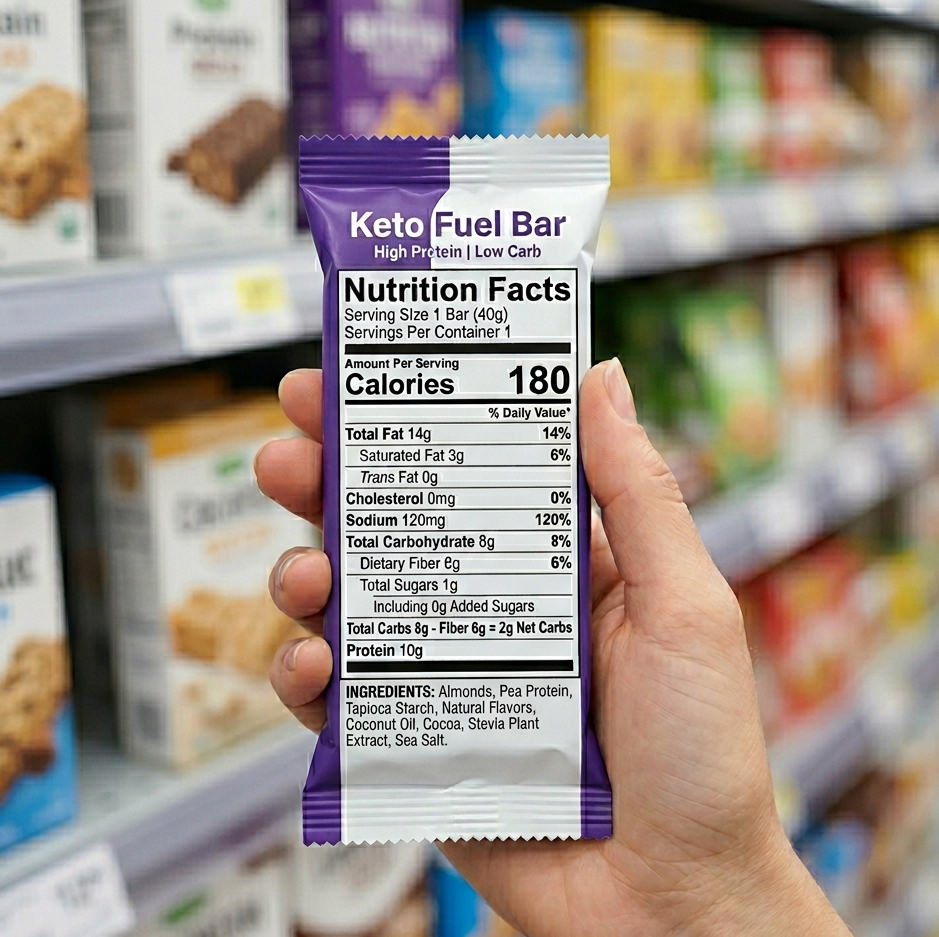
How to Read Keto Labels
Consult a doctor before starting any diet. Not medical advice. See Disclaimer and Terms of Service for details.
One of the most important keto skills is learning how to read food labels correctly. Many foods marketed as “low-carb,” “sugar-free,” or even “keto-friendly” can still contain ingredients that add significant carbs or interfere with your progress.
Understanding labels helps you:
Stay within your carb targets
Avoid hidden sugars
Compare products intelligently
Reduce accidental carb overload
Make better long-term keto decisions
Step 1: Start With Serving Size
Always begin with the serving size.
Manufacturers sometimes make products appear lower in carbs by using unrealistically small servings.
Examples:
Tiny amounts of sauce
Half-bars
Mini cookie servings
Small handfuls of snacks
Ask yourself:
How much will I actually eat?
Am I consuming 1 serving or 3?
Step 2: Check Total Carbohydrates
Total carbohydrates include:
Sugar
Starch
Fiber
Some sugar alcohols
This number is the starting point for calculating net carbs.
Step 3: Calculate Net Carbs
Basic Keto Net Carb Formula
Net Carbs =
Total Carbohydrates
− Dietary Fiber
− Sugar Alcohols
− Allulose/Tagatose/Glycerin (when applicable)
These ingredients are subtracted because they are partially or minimally metabolized by the body compared to traditional carbohydrates.
Important: Not all keto dieters subtract every sugar alcohol equally. Some people are more cautious with maltitol because it can affect blood sugar more significantly.
Step 4: Look Closely at Ingredients
Ingredient lists often reveal far more than front-package marketing.
Ingredients are listed from highest amount to lowest amount by weight. Watch for:
Sugar
Maltodextrin
Dextrose
Corn syrup solids
Tapioca syrup
Rice syrup
Honey
Agave
Even small amounts can add up across multiple foods.
Step 5: Watch for “Healthy” Marketing Terms
Many labels use language that sounds keto-friendly but may still contain substantial carbs.
Examples:
Natural
Paleo
Gluten-free
Organic
Protein-packed
Grain-free
These do not automatically mean keto-friendly.
Step 6: Understand Fiber
Fiber is important on keto because it can:
Support digestion
Improve satiety
Help stabilize energy over time
Many keto-friendly foods naturally contain fiber:
Vegetables
Nuts
Seeds
Avocados
However, avoid assuming all high-fiber products are automatically keto-friendly. Some still contain large amounts of starch or sugar.
Step 7: Learn Common Keto-Friendly Ingredients
Helpful ingredients commonly found in keto foods include:
Almond flour
Coconut flour
Monk fruit
Stevia
Allulose
Erythritol
Psyllium husk
Chia seeds
Step 8: Be Careful With “Sugar-Free”
Sugar-free products may still contain:
Starches
High-carb fillers
Blood-sugar-impacting sweeteners
Common issues:
Maltitol-heavy candy
Hidden dextrose
Large serving sizes
Step 9: Evaluate Processed Keto Foods Realistically
Packaged keto foods can be helpful tools, but:
They are not all equal
Some are highly processed
Some trigger cravings or overeating
Many keto dieters do best when packaged foods supplement — rather than completely replace — whole foods.
Common Keto Label Red Flags
“Low Net Carbs” With High Total Carbs
Some products rely heavily on modified fibers or sugar alcohols.
Extremely Long Ingredient Lists
Often a sign of highly processed products.
Multiple Sweeteners
Can increase cravings or digestive discomfort for some people.
Tiny Serving Sizes
Can make carb counts look deceptively low.
Helpful Keto Label Reading Habit
When evaluating a product:
Check serving size
Check total carbs
Calculate net carbs
Read the full ingredient list
Decide whether it fits your goals
As you gain experience reading labels, it should become much faster and easier.
The CleanKetoYum.com team combines scientific training, R&D experience, and real-world keto practice to create tools and strategies that make keto simpler, more sustainable, and adaptable to complex dietary needs. Our content is designed as practical support for people following a keto diet and is not intended as medical advice.