
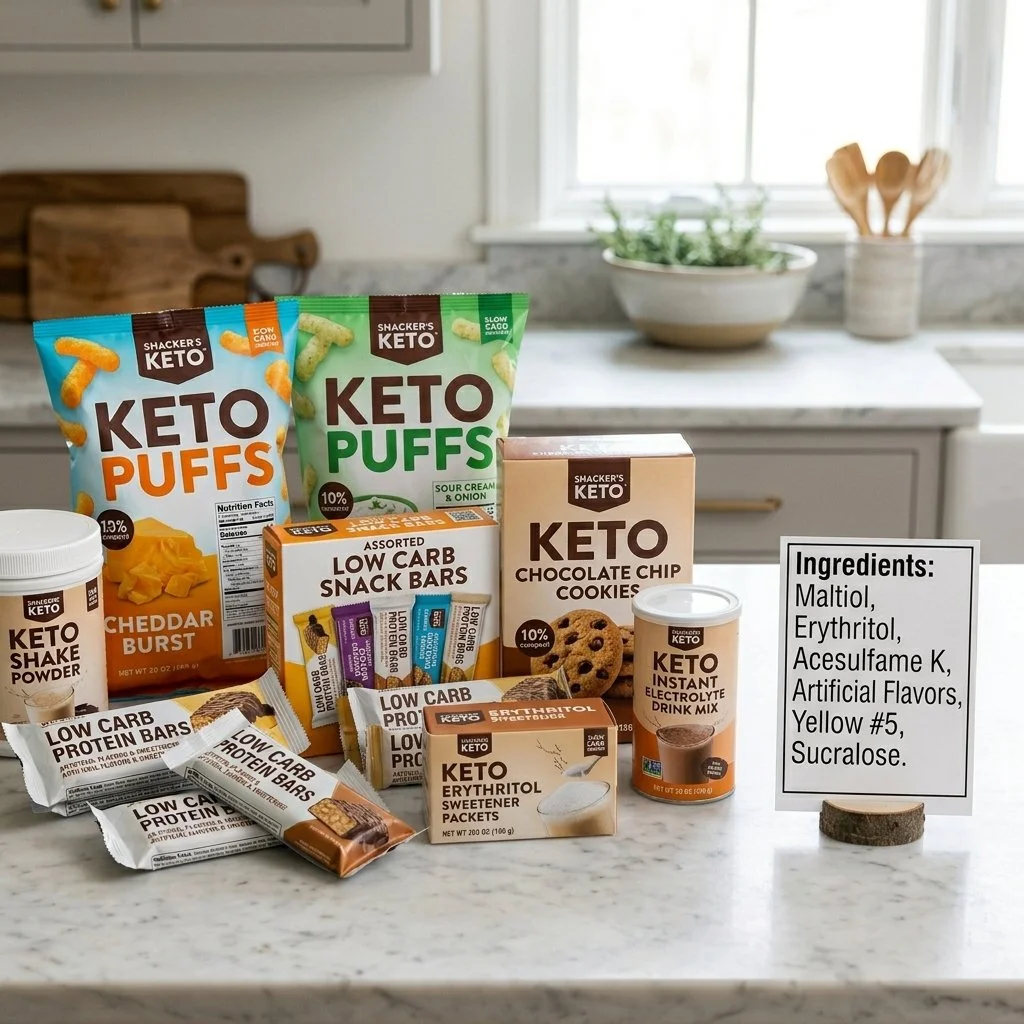
Artificial Ingredients Explained
Consult a doctor before starting any diet. Not medical advice. See Disclaimer and Terms of Service for details.
Many keto-friendly products contain artificial ingredients designed to improve:
Sweetness
Texture
Shelf life
Appearance
Some keto dieters avoid them aggressively, while others use them strategically for convenience and sustainability.
Understanding these ingredients helps you make more informed decisions instead of relying on marketing claims alone.
What Are Artificial Ingredients, Synthetic Ingredients, and Food Additives?
The terms artificial ingredients, synthetic ingredients, and food additives are often used interchangeably, but they do not mean exactly the same thing.
Food additives are the broadest category. They are ingredients added to foods to perform a specific function, such as improving flavor, texture, color, stability, or shelf life. Food additives can be derived from natural sources, created through chemical processes, or made by modifying naturally occurring substances.
Synthetic ingredients are ingredients that are chemically produced or manufactured rather than obtained directly from natural sources. A synthetic ingredient may be identical to a naturally occurring compound, or it may be a substance that does not occur naturally. Synthetic does not automatically mean harmful, and natural does not automatically mean beneficial—the important factors include the specific ingredient, the amount consumed, and how it fits into your overall diet.
Artificial ingredients generally refers to ingredients that are created through chemical processes and are not directly derived from natural sources. Examples commonly found in keto-friendly products include certain artificial sweeteners, synthetic colors, and some preservatives. However, the exact definition can vary depending on regulatory standards and how the term is used in food marketing.
This guide focuses primarily on artificial and synthetic additives that are commonly discussed by keto dieters, including:
Artificial sweeteners used to replace sugar
Synthetic food colors used to improve appearance
Preservatives used to extend shelf life
Synthetic texture additives and stabilizers used to modify consistency
It does not focus on every food additive or every highly processed ingredient found in keto products. Some commonly discussed keto ingredients—such as natural gums, fibers, emulsifiers, and fermentation-derived ingredients—may be processed or unfamiliar but are not necessarily artificial. These ingredients may be covered separately because they involve different considerations than synthetic additives.
The goal is not to label all additives as “good” or “bad,” but to help you understand what is in your food, why manufacturers use these ingredients, and why some keto dieters choose to include or avoid them based on their own priorities.
Common Artificial Ingredients in Keto Foods
Artificial Sweeteners
Common examples:
Sucralose
Aspartame
Saccharin
Acesulfame potassium (Ace-K)
Often found in:
Diet drinks
Protein powders
Sugar-free desserts
Keto snacks
Why people use them:
Very sweet, often hundreds of times sweeter than sugar
Provide sweetness with little or no sugar or calories
Help make lower-carb versions of traditionally sweet foods
Potential concerns for some people:
Aftertaste or flavor differences compared with sugar
Increased desire for sweet foods or cravings
Digestive sensitivity or intolerance
Why some keto dieters choose to avoid them:
Some people limit or avoid artificial sweeteners because they prefer foods with fewer processed ingredients, want to reduce reliance on sweet flavors, or notice that certain sweeteners do not agree with their digestion or appetite. Others choose to avoid them as part of a broader preference for minimally processed foods or because they want their taste preferences to gradually shift away from highly sweet foods.
Artificial Colors
Artificial colors are added to foods to improve appearance, make products look more appealing, or create consistent colors from batch to batch.
Common examples:
Red 40 (Allura Red AC)
Yellow 5 (Tartrazine)
Yellow 6 (Sunset Yellow FCF)
Blue 1 (Brilliant Blue FCF)
Green 3 (Fast Green FCF)
Often found in:
Sugar-free candies
Frostings and dessert products
Protein drinks and powders
Low-carb snack products
Flavored beverages
Packaged keto desserts
Why manufacturers use them:
Create bright, consistent colors
Make products visually appealing
Help maintain a familiar appearance compared with traditional high-sugar versions
Why some keto dieters choose to avoid them:
Some keto dieters avoid artificial colors because they provide no nutritional value and are added primarily for appearance rather than function. Others choose to limit them because they prefer simpler ingredient lists, want to reduce synthetic additives in their diet, or have concerns about possible individual sensitivities. For many people, avoiding artificial colors is part of a broader preference for minimally processed foods and products made with more recognizable ingredients.
Preservatives
Preservatives help packaged foods stay shelf-stable longer by slowing spoilage and maintaining product quality.
Common examples:
Sodium benzoate
Potassium sorbate
Sodium nitrite
Sodium nitrate
BHA (butylated hydroxyanisole)
BHT (butylated hydroxytoluene)
TBHQ (tert-butylhydroquinone)
Often found in:
Processed meats
Sauces and dressings
Packaged snacks
Shelf-stable prepared foods
Why manufacturers use them:
Extend shelf life
Maintain freshness and flavor
Help prevent spoilage
Why some keto dieters choose to avoid them:
Some people avoid certain preservatives because they prefer foods made with simpler ingredient lists and fewer synthetic additives. Others limit them because they are concerned about consuming many processed ingredients over time, prefer fresher foods, or believe that reducing unnecessary additives is consistent with their overall approach to eating.
Texture Additives and Stabilizers
Texture additives and stabilizers are used to improve the consistency, appearance, and shelf life of packaged foods.
Common examples of artificial or synthetic texture additives:
Polysorbate 80
Sodium carboxymethyl cellulose (cellulose gum)
Propylene glycol alginat
Calcium propionate
Carrageenan (naturally derived from seaweed but classified by some organic agencies as a "synthetic substance")
Often found in:
Protein shakes
Low-carb ice creams
Sugar-free desserts
Sauces and dressings
Packaged keto snacks
Why manufacturers use them:
These can help improve:
Creaminess
Thickness
Stability
Moisture retention
Shelf life
Why some keto dieters choose to avoid them:
Some people limit texture additives and stabilizers because they prefer simpler, less processed foods or want to avoid ingredients added primarily for manufacturing purposes rather than nutrition. Others choose to reduce them because certain additives may cause digestive discomfort for some individuals, or because they prefer products made with more recognizable, minimally processed ingredients.
Are Artificial Ingredients “Bad”?
There is no single universal answer.
Some keto dieters notice that they feel better, experience fewer physical symptoms, or notice fewer cravings when avoiding artificial ingredients, and some just prefer simple ingredient lists.
Others use processed keto products occasionally, value convenience, or prioritize longer shelf-life of foods, and therefore consume some products with artificial ingredients.
The Evolving Science Behind Artificial Ingredients
While regulatory agencies review available safety data before approving food additives, research continues to examine the potential long-term effects of individual ingredients, especially in the context of modern diets where people may be exposed to multiple additives from many sources over time. Studies have raised questions about possible relationships between certain artificial ingredients and factors such as gut microbiome changes, inflammation, metabolic health, behavioral effects, or individual sensitivities, although the evidence varies widely depending on the specific ingredient and the amount consumed.
Because of this evolving research landscape, some people choose to limit or avoid certain artificial additives—or all artificial ingredients—as a personal food-quality preference, particularly when comparable products are available without them. Others focus primarily on overall dietary patterns, ingredient amounts, and nutritional value rather than avoiding every additive. Understanding what these ingredients are and why they are used allows keto dieters to make informed choices that align with their own health goals and priorities.
A Practical Keto Perspective
Many successful keto dieters use a middle-ground strategy:
Mostly whole foods
Some convenience products
Awareness without obsession
Helpful Questions to Ask
When evaluating keto products:
Does this fit my carb goals?
How does it affect my hunger?
Does it trigger cravings?
Do I digest it well?
Do I notice any unwanted symptoms after eating it?
Is this helping me stay consistent?
Whole-Food Keto vs. Packaged Keto
Whole-food keto emphasizes:
Meat
Eggs
Vegetables
Avocados
Nuts
Natural fats
Packaged keto foods containing artificial ingredients may offer:
Convenience
Variety
Faster meal prep
Easier travel options
Many people combine both approaches.
Ingredient Lists Matter More Than Front Packaging
Marketing terms like:, natural, keto-friendly, healthy, protein-packed, do not automatically mean the product aligns with your personal goals.
Always review:
Ingredients
Serving sizes
Net carbs
Choosing Artificial Ingredients Based on Your Personal Keto Goals
Artificial ingredients are ultimately a personal decision. The most sustainable keto approach is usually the one that:
Helps you stay consistent by creating food choices and habits you can maintain long term.
Fits your lifestyle by balancing convenience, preferences, budget, and real-world situations.
Supports your health goals by helping you choose foods that align with your personal nutrition priorities.
Reduces unnecessary stress around food decisions by giving you a practical approach that feels manageable and sustainable.
Helps you feel your best by choosing foods that support steady energy and overall well-being.
Avoids ingredients that do not work well for you by paying attention to personal sensitivities, digestive responses, and individual needs.
Matches your body and digestive system by selecting foods you tolerate well and that fit your unique response to different ingredients.
The CleanKetoYum.com team combines scientific training, R&D experience, and real-world keto practice to create tools and strategies that make keto simpler, more sustainable, and adaptable to complex dietary needs. Our content is designed as practical support for people following a keto diet and is not intended as medical advice.