
Seed Oils on Keto
Consult a doctor before starting any diet. Not medical advice. See Disclaimer and Terms of Service for details.
Seed Oils on Keto
Many keto dieters eventually begin asking questions about seed oils.
While keto is primarily focused on reducing carbohydrates, many people also pay closer attention to the types of fats they consume.
Seed oils are widely used in:
Restaurant foods
Processed snacks
Fast food
Salad dressings
Frying oils
Understanding them can help you make more intentional keto food choices.
Important distinction: Seed oils are not the same as eating whole seeds. The term “seed oils” refers specifically to extracted oils made by pressing or processing seeds to isolate their fat content, such as soybean, sunflower, corn, and canola oils. Whole seeds—such as sesame seeds, chia seeds, flaxseeds, hemp seeds, and pumpkin seeds—are intact foods that also provide fiber, protein, minerals, and other beneficial nutrients. While some keto dieters choose to limit certain seed oils, whole seeds are generally considered nutrient-dense, low-carb foods that can fit well into many keto eating patterns.
What Are Seed Oils?
Seed oils are oils extracted from seeds using industrial processing methods.
Common examples include:
Soybean oil
Corn oil
Canola oil
Cottonseed oil
Sunflower oil
Safflower oil
Grapeseed oil
Rice bran oil
They are extremely common in processed foods because they are inexpensive and shelf-stable.
Why Some Keto Dieters Avoid Seed Oils
There are several common reasons keto dieters choose to limit seed oils.
Highly Processed Nature
Many seed oils undergo:
High heat processing
Chemical extraction
Refining and deodorizing
Some people prefer less processed fat sources.
Heavy Use in Processed Foods
Seed oils are especially common in ultra-processed foods that may:
Increase overeating
Trigger cravings
Reduce meal quality
Fatty Acid Balance Concerns
Some keto dieters try to balance omega-6 fats with omega-3-rich foods such as:
Salmon
Sardines
Anchovies
Personal Choice: Why Some Keto Dieters Avoid Seed Oils
Not every keto dieter completely avoids seed oils. Some people:
Focus primarily on carb reduction
Use flexibility when dining out
Prioritize sustainability and consistency
Others prefer minimizing seed oils whenever practical.
Common Foods High in Seed Oils
Restaurant Foods
Fried foods
Dressings
Sauces
Grilled meats brushed with oil
Packaged Keto Foods
Chips
Crackers
Protein bars
Salad dressings
Condiments
Mayo
Creamy sauces
Flavored dips
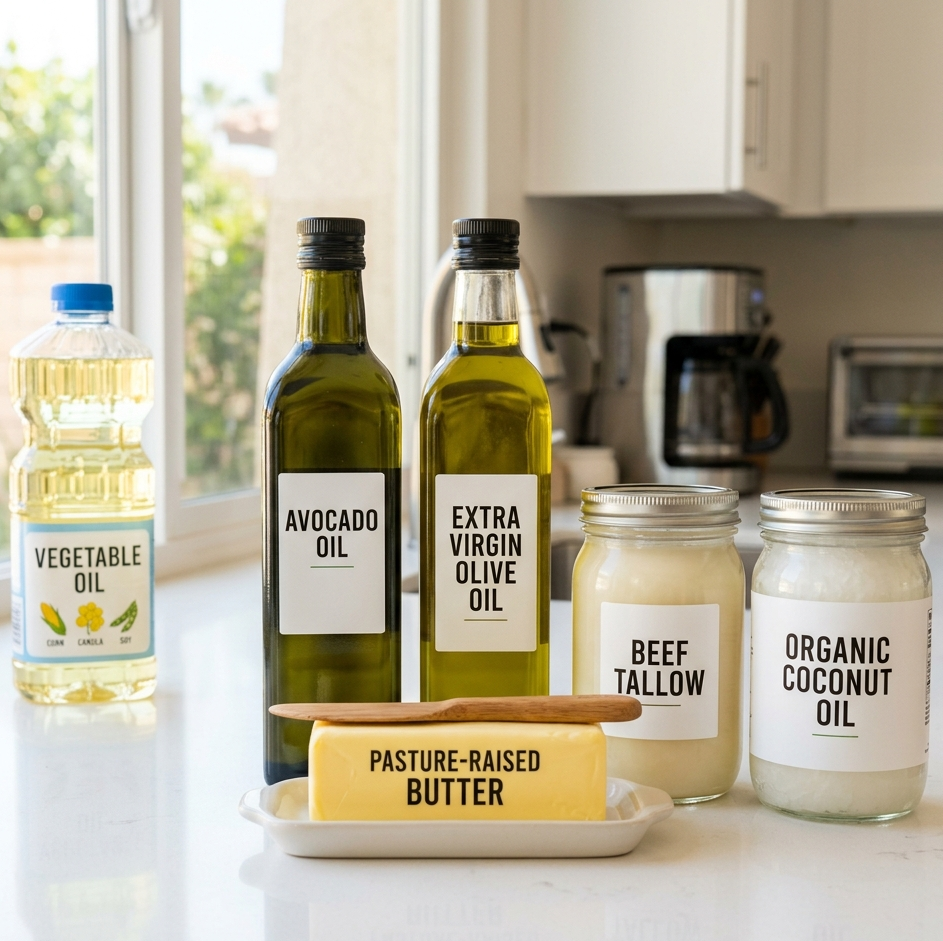
Popular Keto-Friendly Fat Alternatives
Many keto dieters prefer fats such as:
Olive Oil
Commonly used for:
Salads
Light cooking
Dressings
Avocado Oil
Popular for:
High-heat cooking
Air frying
Roasting
Butter and Ghee
Used for:
Eggs
Vegetables
Sauces
Coconut Oil
Often used in:
Baking
Fat bombs
Coffee drinks
Beef Tallow
Popular for:
Frying
Roasting
Cast-iron cooking
Practical Keto Strategy
For many people, a balanced approach works best:
Prioritize carb control first
Improve ingredient quality gradually
Focus mostly on whole foods
Avoid perfectionism
Reading Labels for Seed Oils
Watch ingredient lists for:
Soybean oil
Canola oil
Corn oil
Vegetable oil blends
Some keto products specifically advertise:
Avocado oil
Olive oil
No seed oils
Dining Out Realistically
Avoiding seed oils completely while traveling or eating out can be difficult.
Helpful strategies:
Choose grilled foods
Request sauces on the side
Favor simpler ingredient lists
Focus on overall consistency
Keto success usually comes from sustainable habits rather than perfection.
The CleanKetoYum.com team combines scientific training, R&D experience, and real-world keto practice to create tools and strategies that make keto simpler, more sustainable, and adaptable to complex dietary needs. Our content is designed as practical support for people following a keto diet and is not intended as medical advice.