
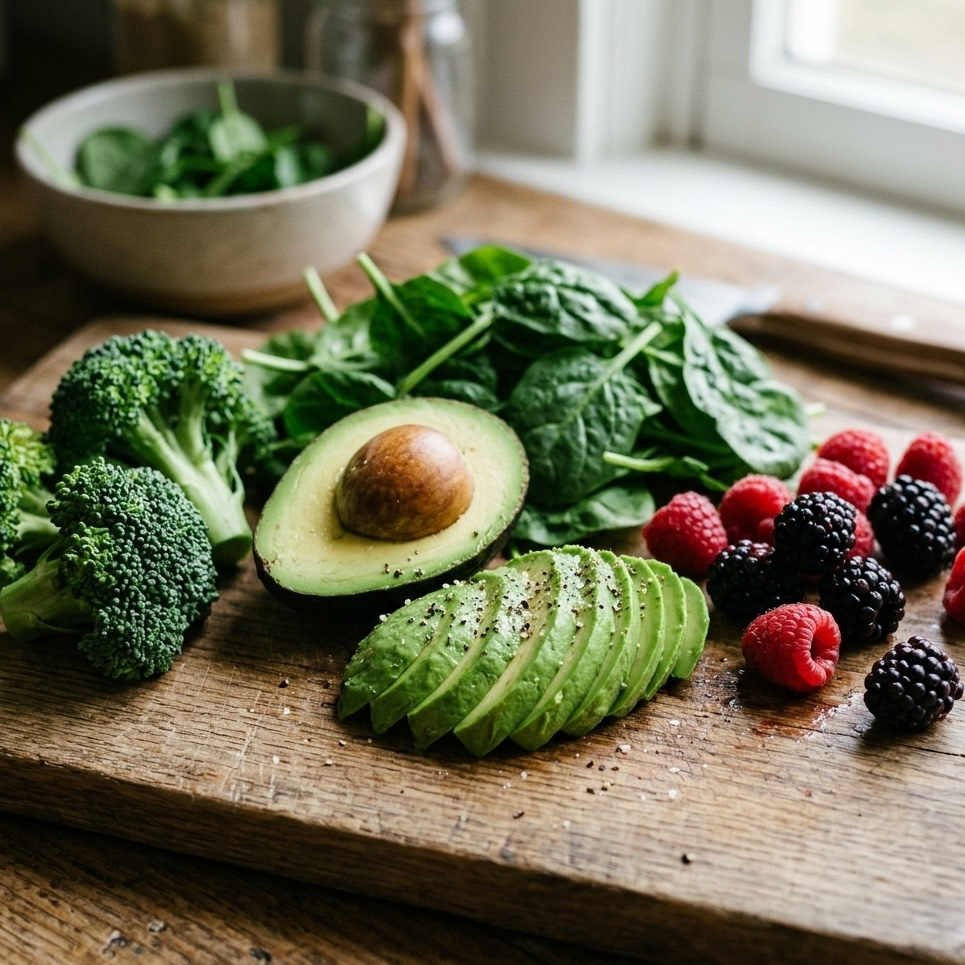
Keto Vegetables and Fruit Guide
Consult a doctor before starting any diet. Not medical advice. See Disclaimer and Terms of Service for details.
One of the biggest myths about starting a ketogenic diet is that you have to give up fruits and vegetables entirely and live solely on meat, cheese, and butter. While it is true that starchy vegetables and high-sugar fruits can quickly eat up your daily carbohydrate budget, cutting out produce altogether is neither necessary nor recommended. In fact, learning how to incorporate the right low-carb vegetables and fruits is one of the smartest ways to stay satisfied, energized, and successful on a keto diet.
Why Produce Matters on Keto (Beyond Just Macros)
When you transition to a low-carbohydrate lifestyle, every gram of carbs counts. Using a generous portion of your daily carb allowance on whole, nutrient-dense produce offers far more than just flavor—it provides essential nutritional and psychological support that makes keto sustainable over the long haul.
Essential Micronutrients and Digestive Support
Cutting out grains, legumes, and high-sugar fruits can leave gaps in your daily vitamin and mineral intake if you aren't careful. Low-carb vegetables and fruits help fill those gaps naturally by supplying:
Key electrolytes: Foods like spinach, avocados, and mushrooms are packed with potassium and magnesium, which are especially important on keto as your body flushes out extra water and minerals.
Essential vitamins and antioxidants: Leafy greens, peppers, and berries deliver immune-supporting Vitamin C, Vitamin K, folate, and protective plant compounds without spiking blood sugar.
Gut-friendly fiber: Soluble and insoluble fiber from whole produce helps keep your digestion moving smoothly and feeds beneficial gut bacteria, helping prevent the constipation that some beginners experience when starting keto.
The Strategic Role of Produce for Keto Success
Beyond nutrition, whole fruits and vegetables serve a powerful functional role in helping you stick to your eating plan without feeling deprived:
Boosts food volume for greater fullness: High-water, high-fiber vegetables take up physical space in your stomach, triggering stretch receptors that signal fullness to your brain for very few calories or net carbs.
The satisfaction of chewing: Eating rich, soft keto foods like eggs, cheese, and avocado all day can sometimes leave you feeling unsatisfied. Crunching through crisp celery, raw bell peppers, or a hearty salad engages your jaw and sends sensory signals to your brain that you’ve eaten a substantial meal.
Preserves a sense of mealtime normalcy: Keeping a generous side of roasted broccoli, sautéed zucchini, or a fresh side salad on your plate allows your meals to look and feel completely normal—making it much easier to cook for your family or order at restaurants without feeling like you are on a restrictive diet.
Adds color, texture, and fun: Brightening up your plate with deep greens, ruby-red berries, and crisp radishes keeps meals visually appealing and gives you a fun excuse to experiment with new flavors and lesser-known produce.
The “Above-Ground vs. Below-Ground” Rule
If you ever feel unsure in the grocery store aisle, use this simple rule of thumb: vegetables that grow above the ground are usually low in carbs and keto-friendly, while vegetables that grow below the ground tend to be high in starch.
Above-ground veggies—like leafy greens, broccoli, cauliflower, zucchini, and asparagus—store very little starch. Below-ground root vegetables—like potatoes, sweet potatoes, carrots, beets, and parsnips—act as underground energy storage for the plant, packing dense amounts of starch and sugar.
Important exceptions to keep in mind: Some below-ground vegetables, such as radishes, turnips, and jicama, are surprisingly low in net carbs and fit nicely into a keto diet. Conversely, a few above-ground items—like corn, peas, and winter squashes (such as butternut or acorn squash)—are relatively high in starch and are best limited or avoided.
Keto-Friendly Vegetables
Non-starchy vegetables are the backbone of a clean, well-rounded ketogenic diet. You can enjoy generous portions of leafy greens and cruciferous veggies every single day while keeping your net carbs comfortably low.
Best Low-Carb Vegetables (Net Carbs per 1-Cup Serving)
Note: Net carbs are calculated by subtracting dietary fiber from total carbohydrates. Values are approximate based on USDA food composition data for raw vegetables.
| Vegetable (1 Cup, Raw) | Approximate Net Carbs |
|---|---|
| Spinach | 0.4 g |
| Romaine Lettuce | 0.6 g |
| Arugula | 0.4 g |
| Celery (chopped) | 1.4 g |
| Mushrooms (sliced) | 1.6 g |
| Cucumber (sliced, with peel) | 3.1 g |
| Zucchini (sliced) | 2.4 g |
| Asparagus (chopped) | 2.4 g |
| Cauliflower (chopped) | 3.2 g |
| Cabbage (shredded) | 3.0 g |
| Broccoli (chopped) | 3.6 g |
| Green Bell Pepper (chopped) | 4.4 g |
| Green Beans | 4.3 g |
Surprising & Lesser-Known Keto Veggies to Try
If you’re tired of eating broccoli and salad every night, branching out into lesser-known or surprising vegetables can bring fresh excitement to your plate while expanding your micronutrient intake:
Everyday surprises: Many beginners assume mushrooms, asparagus, bell peppers, and snow peas are off-limits, but all four fit comfortably into a low-carb plan when enjoyed in sensible portions (green bell peppers are slightly lower in carbs than red, yellow, or orange ones).
Hearts of palm: Harvested from the inner core of certain palm trees, hearts of palm have a mild, artichoke-like flavor and only about 2 grams of net carbs per half-cup—and they can even be bought pre-shredded as a pasta substitute.
Chayote squash: This crisp, pale-green summer squash tastes like a cross between an apple and a cucumber, holds its shape wonderfully when sautéed or roasted, and contains roughly 3 grams of net carbs per cup.
Kohlrabi: A member of the cabbage family with a mild, slightly sweet crunch similar to broccoli stems, offering about 4 grams of net carbs per cup.
Daikon radish and jicama: Both root vegetables deliver a crisp, refreshing crunch for slaws, fries, or dipping. Roasted radishes lose their peppery bite and make a fantastic stand-in for roasted potatoes, while jicama offers a sweet crunch with about 5 grams of net carbs per cup.
Okra: Rich in fiber and antioxidants, sliced okra can be roasted until crispy or added to stews for only about 4 grams of net carbs per cup.
Vegetables to Limit or Avoid
High-starch vegetables pack dense amounts of digestible carbohydrates that can quickly pause ketosis:
Best to avoid: Russet and red potatoes, sweet potatoes, yams, corn, green peas, and parsnips.
Use in small amounts as flavor boosters: Vegetables like onions, garlic, carrots, and cherry tomatoes sit right in the middle. While eating a whole bowl of glazed carrots or caramelized onions will spike your carb count, tossing a tablespoon or two of diced onion, minced garlic, or sliced cherry tomatoes into a recipe adds huge flavor for just 1 to 2 grams of net carbs.
Easy Low-Carb Veggie Swaps
Giving up starchy side dishes does not mean giving up your favorite comfort foods. Use these simple vegetable swaps to keep the familiar textures and flavors you love while slashing the net carbs:
Swap potatoes for cauliflower or radishes: Mash steamed cauliflower with butter and garlic instead of mashed potatoes, or roast halved radishes to replace roasted red potatoes.
Swap corn or peas for diced zucchini or green beans: Stir chopped green beans or firm diced zucchini into soups, casseroles, and skillet meals for similar color and bite.
Swap sweet onions for green onions (scallions): Use the green and light-green tops of scallions to get bright onion flavor with a fraction of the carbs.
Swap pasta or rice for zucchini noodles or riced cauliflower: Use spiralized zucchini or pulsed cauliflower florets to soak up rich sauces without the carb load.
Keto-Friendly Fruits
Yes, you really can eat fruit on a ketogenic diet! While most traditional fruits are packed with natural sugars (fructose), several low-sugar, high-fiber fruits fit comfortably into a daily limit of 20 to 50 net carbs.
Best Low-Carb Fruits (Net Carbs per Serving)
Note: Serving sizes reflect typical keto-friendly portions based on USDA food composition data.
| Fruit & Typical Keto Serving | Approximate Net Carbs |
|---|---|
| Avocado (1/2 medium fruit) | 1.8 g |
| Olives (10 large black or green) | 1.5 g |
| Lemon or Lime Juice (1 tablespoon) | 1.0 g |
| Raspberries (1/2 cup) | 3.3 g |
| Blackberries (1/2 cup) | 3.1 g |
| Strawberries (1/2 cup, sliced) | 4.7 g |
| Unsweetened Coconut Meat (1/2 cup, shredded) | 2.5 g |
| Watermelon (1/2 cup, diced) | 5.5 g |
| Cantaloupe (1/2 cup, diced) | 5.8 g |
Surprising & Lesser-Known Keto Fruits
When you think of fruit, culinary botanicals often slip under the radar—along with a few berry options that work great when used intentionally:
Savory fruits (avocados, olives, and tomatoes): Botanically speaking, avocados, olives, and tomatoes are all fruits! Avocados and olives are keto superstars because they are loaded with heart-healthy monounsaturated fats and almost zero net carbs.
Strawberries: Many beginners assume strawberries are too sweet for keto, yet half a cup of sliced berries has under 5 grams of net carbs and delivers intense natural sweetness.
Unsweetened açai berry pulp mash: Found in the freezer section in single-serve packets, pure unsweetened açai mash contains virtually zero sugar and around 1 to 2 grams of net carbs per packet, making it a rich base for keto smoothie bowls.
Unsweetened dried cranberries (in small amounts): Standard dried cranberries are heavily coated in sugar, but unsweetened or sugar-free varieties can be tossed sparingly into salads or homemade trail mix for a tart burst of flavor.
Creative Ways to Use Fruit on Keto
You don’t need a massive bowl of fruit to enjoy its bright, refreshing flavor. A small amount goes a long way:
Make simple raw or cooked desserts: Fresh or gently simmered berries—lightly sweetened with stevia extract—pair effortlessly with keto whipped cream, cream cheese, or keto-friendly sponge cake. Try layering fresh berries with whipped cream and low-carb cake pieces in our Keto Quick Vanilla Berry Trifle Bowl recipe for a crowd-pleasing dessert that feels completely indulgent, or our Pumpkin Spice Cream Cheese Spread recipe for a taste of Autumn anytime.
Enhance water and meals with citrus: Squeezing fresh lemon or lime juice over grilled fish, avocados, or sparkling water adds instant zing for roughly 1 gram of net carbs per tablespoon. If you want zero-carb convenience on the go, crystallized citrus packets like True Lime or True Lemon use real cold-pressed citrus oils and juices to flavor plain water or tea with zero sugar and zero net carbs—and adding a touch of stevia turns it into a refreshing, homemade-style keto lemonade or limeade
Fruits to Limit or Avoid (And Sneaky Fruit Traps)
High-sugar fruits to skip: Bananas, apples, pears, grapes, mangoes, pineapples, oranges, and peaches pack 15 to 30+ grams of net carbs in a single serving and can quickly knock you out of ketosis.
Watch out for sneaky fruit traps: Avoid fruit juices, fruit smoothies, canned fruit packed in syrup, and sweetened dried fruits (like raisins and dates). Also be cautious of packaged snacks claiming to be "Made with Real Fruit"—they are often sweetened with concentrated apple or white grape juice.
Easy Low-Carb Fruit Swaps
You can still capture the bright sweetness and creamy textures of higher-carb fruits in your smoothies, salads, and desserts with a few clever produce trade-offs:
Swap bananas for avocado or frozen zucchini: Blend ripe avocado (or peeled, steamed-and-frozen zucchini coins) into keto smoothies for thick, creamy texture without the sugar.
Swap raisins or dates for unsweetened cranberries or cacao nibs: Add a sprinkle of unsweetened dried cranberries or crunchy cacao nibs to salads and trail mixes instead of high-sugar dried fruit.
Swap sweet oranges or tropical fruit for berries with citrus zest: Toss raspberries or strawberries with a squeeze of fresh lemon or lime juice to mimic the bright, tangy punch of higher-carb citrus fruits.
Swap apples for jicama or chayote: Slice crisp raw jicama or lightly cooked chayote with a sprinkle of cinnamon for a crunchy, apple-like snack with minimal net carbs.
Smart Produce Shopping Tips
Buying low-carb produce doesn't have to be complicated or expensive if you shop with a few simple strategies in mind:
Embrace the freezer aisle: Plain frozen vegetables (like cauliflower rice, broccoli florets, and spinach) and unsweetened frozen berries are flash-frozen at peak ripeness. They are just as nutritious as fresh produce, cost less, and won't spoil in your fridge before you have time to cook them.
Read labels on frozen and canned produce: Always check the ingredient list on frozen vegetable bags and canned tomatoes or olives to make sure manufacturers haven't added sugar, cornstarch glazes, or inflammatory vegetable oils.
Shop in season: Fresh berries, zucchini, asparagus, and leafy greens drop significantly in price when they are in peak season—buy extra when prices are low and freeze what you can't eat right away.
Smart Prep & Cooking Tips
How you prepare and pair your produce makes a big difference in both how you track your macros and how well your body absorbs nutrients.
Does Cooking Change the Net Carbs of Vegetables or Fruits?
Cooking does not change the total amount of carbohydrates in a piece of produce, though it can change the carb count per cup.
When you sauté spinach, roast broccoli, or simmer berries, the heat causes water to evaporate and the food to shrink. Because the food takes up less physical space, 1 cup of cooked spinach contains more net carbs than 1 cup of raw spinach simply because you are fitting more leaves into the measuring cup.
If you track your macros closely, you can track them accurately by weighing your produce raw before cooking, or making sure you select the "cooked" entry in your tracking app rather than the "raw" entry. (Note: Cooking also softens tough plant fibers, which can make fibrous veggies easier to digest and slightly increase how much energy your body absorbs from them, though this difference is minor for non-starchy keto veggies.)
Pair Produce with Healthy Fats
Many of the most valuable nutrients in low-carb vegetables—including Vitamins A, D, E, and K, as well as antioxidants like beta-carotene and lycopene—are fat-soluble. That means your body needs dietary fat present in the same meal to absorb them properly. Drizzling extra-virgin olive oil over your salad, tossing roasted Brussels sprouts in butter, or slicing avocado onto your greens makes your vegetables taste better and unlocks more nutrition.
Bringing Variety and Color Back to Your Plate
Navigating produce on a low-carb lifestyle doesn’t have to feel like a math test or a list of off-limit foods. Once you know which crisp greens, savory veggies, and low-sugar berries fit easily into your daily carb limit, the produce aisle becomes your best tool for keeping meals exciting, filling, and deeply nourishing. Start by picking a few go-to staples you already love, toss in one new vegetable or berry each week to keep things interesting, and let fresh produce bring vibrant flavor and variety to your keto diet.
References & Research
U.S. Department of Agriculture (USDA), Agricultural Research Service. FoodData Central. Updated 2025. Available at: usda.gov
Daley SF, Masood W, Annamaraju P, Khan Suheb MZ. The Ketogenic Diet: Clinical Applications, Evidence-based Indications, and Implementation. StatPearls Publishing. Updated December 13, 2025. Available at: nih.gov
Rolls BJ. Dietary fiber and energy density: effects on satiety and weight control. Nutrition Reviews. 2009;67(Suppl 1):S136-S139. Available at: nih.gov
Hollis JH. The effect of mastication on food intake, satiety and body weight. Physiology & Behavior. 2018;193(Pt B):242-245. Available at: nih.gov
Brown MJ, Ferruzzi MG, Nguyen ML, et al. Carotenoid bioavailability is higher from salads ingested with full-fat than with fat-reduced salad dressings as measured with electrochemical detection. American Journal of Clinical Nutrition. 2004;80(2):396-403. Available at: nih.gov
The CleanKetoYum.com team combines scientific training, R&D experience, and real-world keto practice to create tools and strategies that make keto simpler, more sustainable, and adaptable to complex dietary needs. Our content is designed as practical support for people following a keto diet and is not intended as medical advice.