
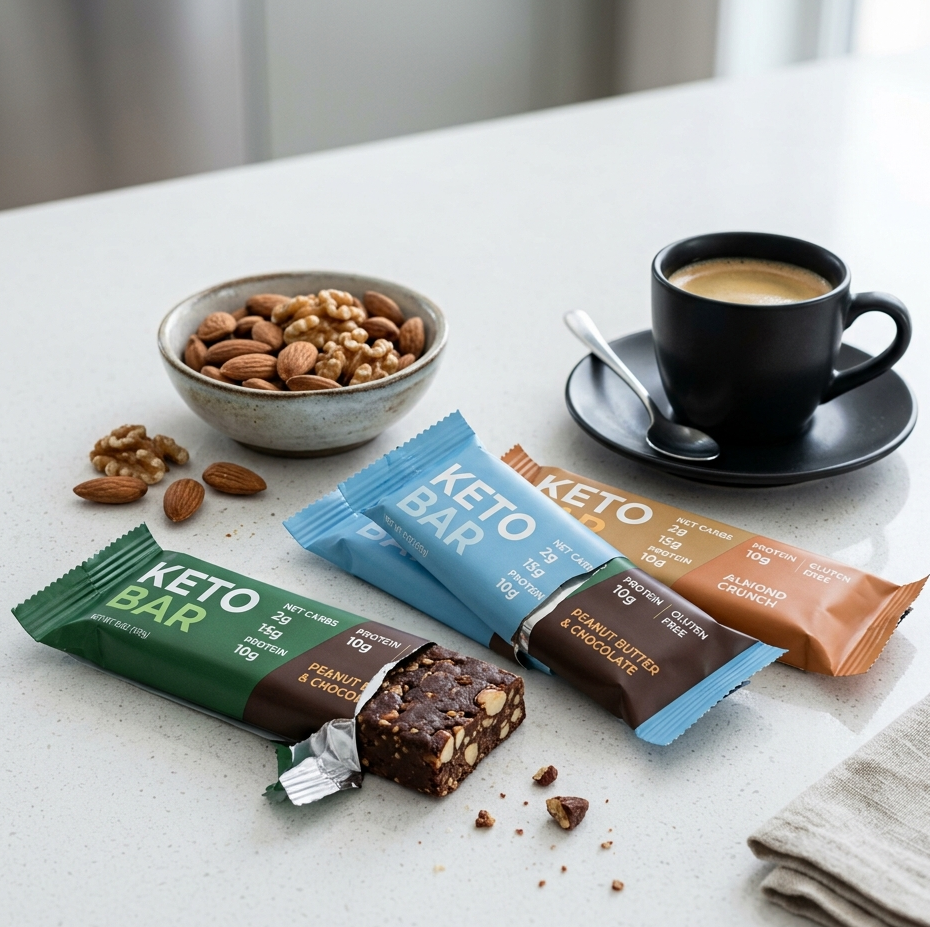
Keto Protein Bar Guide
Consult a doctor before starting any diet. Not medical advice. See Disclaimer and Terms of Service for details.
Keto protein bars can be extremely useful for:
Travel
Busy schedules
Emergency snacks
Meal replacements
Workout recovery
However, many bars marketed as “keto” are highly processed or contain ingredients that may affect blood sugar, hunger, digestion, or cravings differently from person to person.
This guide explains how to evaluate keto protein bars and choose better options.
What Makes a Protein Bar Keto-Friendly?
A keto protein bar usually includes:
Lower net carbs
Moderate protein
Higher fats or fiber
Minimal added sugar
Important Factors to Evaluate
Net Carbs
Many keto dieters aim for bars with:
About 2–6g net carbs
However:
Serving sizes vary
Fiber calculations vary
Sugar alcohol tolerance varies
Protein Content
Most keto bars contain:
10–20g protein
Higher protein can help:
Satiety
Muscle maintenance
Convenience meals
Fiber Sources
Common fibers include:
Chicory root fiber
Tapioca fiber
Soluble corn fiber
Oat fiber
Some people tolerate these well. Others experience:
Gas
Bloating
Digestive discomfort
Sweeteners
Common keto sweeteners include:
Erythritol
Monk fruit
Stevia
Allulose
Some bars also use:
Maltitol
Tapioca syrups
IMO syrups
These may impact blood sugar more significantly.
Protein Sources
Whey Protein
Common and highly bioavailable.
Collagen Protein
Popular in keto products but incomplete as a sole protein source.
Milk Protein Isolate
Common in softer bars.
Plant Proteins
Used in vegan keto bars.
Common Types of Keto Protein Bars
Dessert-Style Bars
Taste similar to candy bars.
Benefits
Satisfying
Convenient
Helps cravings
Downsides
May trigger overeating in some people
Clean Ingredient Bars
Focus on simpler ingredient lists.
Benefits
Less processed
Often easier to digest
Downsides
Texture may be less candy-like
Meal Replacement Bars
Higher calorie and protein content.
Useful for:
Travel
Busy days
Emergency meals
How to Read Keto Protein Bar Labels
Look Beyond “Net Carbs”
Check:
Total calories
Ingredients
Sweeteners
Fiber types
Protein quality
Watch Serving Sizes
Some bars are deceptively small.
Check for Added Sugars
Avoid:
Corn syrup
Sugar
Honey
Brown rice syrup
Evaluate Personal Tolerance
Some people tolerate certain fibers or sweeteners poorly.
When Keto Protein Bars Are Most Useful
Travel
Easy portable backup food.
Emergencies
Helpful when keto meals are unavailable.
Busy Workdays
Can prevent impulsive high-carb eating.
Post-Workout
Useful protein option.
Potential Downsides
Easy to Overeat
Some taste very similar to candy bars.
Digestive Issues
Added fibers and sugar alcohols can cause discomfort.
Highly Processed Ingredients
Some products rely heavily on engineered starches and fibers.
Better Ways to Use Keto Bars
Use them as:
Convenience tools
Backup foods
Occasional meal support
Rather than:
Primary daily nutrition
Final Considerations
Keto protein bars can be incredibly helpful when used strategically. The best bars combine:
Lower net carbs
Quality ingredients
Satisfying protein
Reasonable sweeteners
Good taste
Pay attention to how different products affect:
Hunger
Cravings
Digestion
Blood sugar
Overall keto progress
The CleanKetoYum.com team combines scientific training, R&D experience, and real-world keto practice to create tools and strategies that make keto simpler, more sustainable, and adaptable to complex dietary needs. Our content is designed as practical support for people following a keto diet and is not intended as medical advice.