
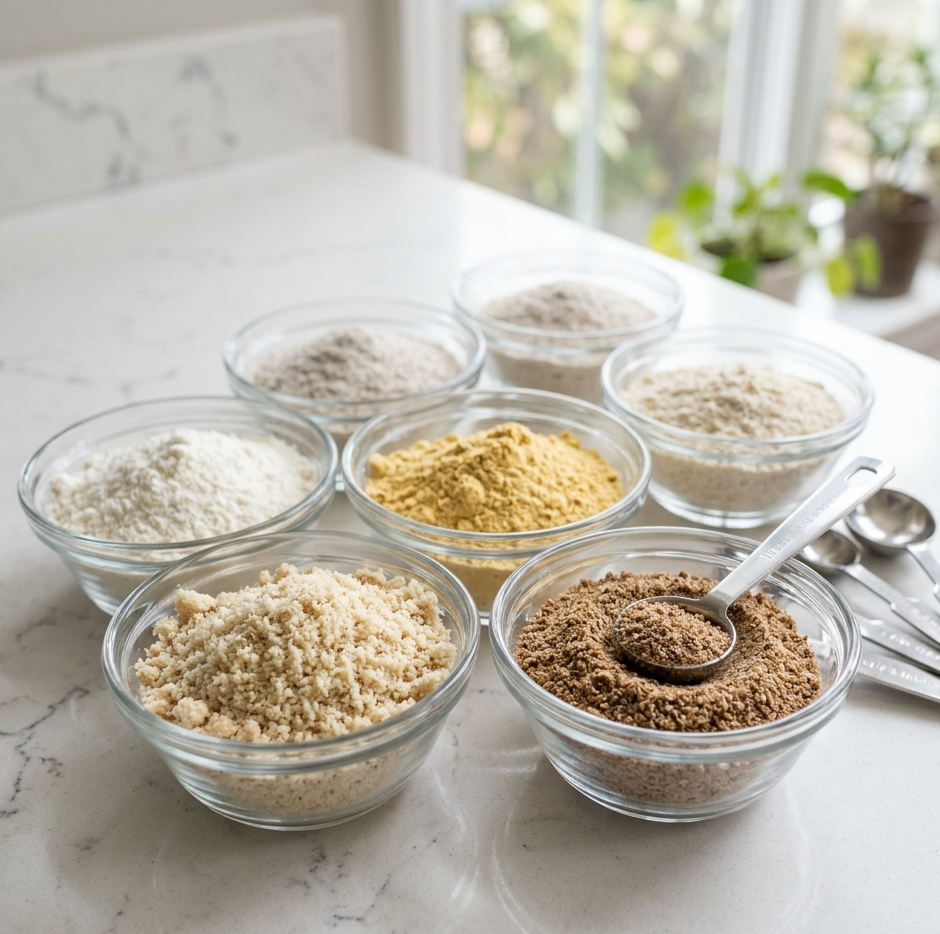
Guide to the Best Keto Flours
Consult a doctor before starting any diet. Not medical advice. See Disclaimer and Terms of Service for details.
Traditional wheat flour is one of the biggest challenges when switching to keto cooking and baking. Fortunately, there are now many low-carb flour alternatives that can successfully replace wheat flour in breads, cookies, pancakes, coatings, pizza crusts, and more.
However, keto flours behave very differently from one another. Some absorb large amounts of moisture, some create dense textures, and others work best only in small amounts. Understanding the strengths and limitations of each flour can dramatically improve your keto recipes.
What Makes a Flour Keto-Friendly?
Keto flours are generally:
Low in net carbs
Higher in fiber
Often higher in fat or protein
Usually grain-free and gluten-free
Most keto flours are made from:
Nuts
Seeds
Legumes
Fiber-rich plant materials
Almond Flour
Why It’s Popular
Almond flour is the most widely used keto flour because it:
Has a mild flavor
Works in many recipes
Browns well
Creates soft baked textures
Is easy to find
Best Uses
Cookies
Pancakes
Muffins
Quick breads
Breaded coatings
Pizza crusts
Approximate Net Carbs
About 2–3g net carbs per 1/4 cup.
Tips
Use finely ground blanched almond flour for best texture.
Almond meal is coarser and denser.
Recipes often need additional eggs or binders.
Downsides
Higher in calories
Can become oily in some recipes
Nut allergy concerns
Coconut Flour
Why It’s Unique
Coconut flour is extremely absorbent and high in fiber.
Best Uses
Cakes
Muffins
Pancakes
Thickening
Approximate Net Carbs
About 2–3g net carbs per 2 tablespoons.
Important Baking Rule
You cannot substitute coconut flour 1:1 for wheat flour or almond flour.
Coconut flour absorbs massive amounts of liquid and usually requires:
More eggs
More moisture
Smaller quantities
Tips
Start with trusted recipes.
A little goes a long way.
Downsides
Can become dry or crumbly
Mild coconut flavor may show through
Keto Wheat Flour
Why It’s Different
Unlike almond flour or coconut flour, keto wheat flour is made from wheat-based ingredients that have been modified or blended to dramatically reduce net carbs while retaining many of the baking properties of traditional wheat flour. These blends often contain ingredients such as vital wheat gluten, wheat fiber, resistant starches, and other low-carb components. As a result, they can produce breads and baked goods with a texture that is closer to conventional wheat-based recipes.
Best Uses
Yeast breads
Dinner rolls
Pizza crusts
Bagels
Tortillas and wraps
Muffins
Approximate Net Carbs
Typically about 2–4g net carbs per 1/4 cup, depending on the specific blend.
Why Bakers Like It
Provides a more traditional bread texture
Works well with yeast
Creates chewy, elastic doughs
Can often replace all-purpose flour more easily than other keto flours
Tips
Follow recipe instructions carefully, as different blends behave differently.
Keto wheat flour often works best in recipes specifically developed for it.
For yeast breads, allow adequate rising time to develop texture and structure.
Downsides
Not suitable for people with gluten intolerance or celiac disease
Can be more expensive than other keto flours
Availability may be limited compared to almond or coconut flour
Flaxseed Meal
Why Keto Dieters Use It
Ground flax adds:
Fiber
Healthy fats
Structure
Best Uses
Crackers
Breads
Pancakes
Coatings
Thickening
Approximate Net Carbs
About 0–1g net carbs per 2 tablespoons.
Benefits
Rich in omega-3 fats
Helps with texture
Budget-friendly
Tips
Golden flax has milder flavor than brown flax.
Store refrigerated for freshness.
Psyllium Husk Powder
What It Does
Psyllium is not really a flour. It is a high-fiber binder often used to:
Improve elasticity
Mimic gluten
Add chewiness to keto breads
Best Uses
Keto bread
Pizza dough
Tortillas
Bagels
Approximate Net Carbs
Usually close to 0g net carbs.
Important Notes
Small amounts are powerful.
Too much can create gummy textures.
Lupin Flour
Why Some Keto Bakers Love It
Lupin flour is higher in protein and lower in carbs than many alternatives.
Best Uses
Bread
Pasta alternatives
Savory baking
Approximate Net Carbs
About 1–2g net carbs per 1/4 cup.
Texture
Creates a more wheat-like structure than many keto flours.
Downsides
Stronger flavor
May bother people sensitive to legumes or peanuts
Sunflower Seed Flour
Benefits
A nut-free alternative to almond flour.
Best Uses
Cookies
Muffins
Breading
Pancakes
Approximate Net Carbs
About 3–4g net carbs per 1/4 cup.
Important Note
It can react with baking soda and turn baked goods green. This is harmless but surprising if you are not expecting it.
Sesame Flour
Why It’s Interesting
Sesame flour provides:
Nutty flavor
Moderate protein
Lower carbs
Best Uses
Crackers
Savory breads
Flatbreads
Approximate Net Carbs
About 1–2g net carbs per 1/4 cup.
Oat Fiber
What It Is
Oat fiber is mostly insoluble fiber and very low in digestible carbs.
Best Uses
Improving bread texture
Bulking recipes
Lowering carb counts
Important Note
It is NOT the same as oat flour.
Whey Protein Isolate
Why It’s Used
Some advanced keto baking recipes use whey protein isolate to improve:
Structure
Elasticity
Browning
Best Uses
Bread
Pizza dough
High-protein baked goods
Tips
Use only recipes specifically designed for it because substitutions can fail easily.
Choosing the Right Keto Flour
Best All-Purpose Choice
Almond flour
Best for Soft Cakes
Coconut flour blends
Best for Traditional Bread Texture
Keto wheat flour
Best for Gluten-Free Bread Texture
Psyllium husk + almond flour + whey protein combinations
Best Nut-Free Option
Sunflower seed flour
Best for Fiber
Flaxseed meal or psyllium husk
Helpful Keto Flour Tips
Combine Flours
Many successful keto recipes use multiple flours together for better texture.
Expect Different Results
Keto baking rarely behaves exactly like traditional baking.
Use Extra Moisture
Low-carb flours often need:
More eggs
More fats
More liquid
Let Dough Rest
Many keto batters improve after resting for a few minutes because fiber absorbs moisture over time.
Common Keto Flour Mistakes
Using Coconut Flour 1:1
This is one of the most common keto baking disasters.
Overmixing
Can create dense or gummy textures.
Ignoring Texture Differences
Some flours work better for crispy foods, while others work better for soft baked goods.
Not Measuring Carefully
Keto baking is often less forgiving than traditional baking.
Understanding Keto Flours is Worth the Effort
Keto flours open the door to low-carb versions of breads, cookies, pancakes, pizza crusts, and many other favorite foods. Learning how different flours behave can dramatically improve your success in keto cooking and baking.
Most keto bakers eventually develop a small collection of favorite flours for different purposes. Almond flour, coconut flour, flaxseed meal, and psyllium husk are often the core foundation of a versatile keto pantry.
The CleanKetoYum.com team combines scientific training, R&D experience, and real-world keto practice to create tools and strategies that make keto simpler, more sustainable, and adaptable to complex dietary needs. Our content is designed as practical support for people following a keto diet and is not intended as medical advice.